
From Victory Homes to High-Cost Housing
How Canadian Homeownership Changed After World War II
The Canadian housing journey has shifted from a post-war era of rapid nation-building and modest 'Victory Homes' to a modern landscape defined by structural price barriers and a widening tenure split. This analysis explores how borrowing power, interest rate gravity, and systemic supply constraints have reshaped homeownership from a simple milestone into a complex strategic problem.
The History of Homeownership in Canada, From Postwar Nation Building to Today’s Affordability Debate
If you’ve ever heard, “Your grandparents bought their first house on one income,” you’ve probably had the same reaction most Canadians have now.
Things were different back then, and they’re different now.
Canada’s housing system has undergone a gradual transformation over several decades. Some changes, such as fluctuations in interest rates, were highly visible. Others, including shifts in construction practices, urban development, and evolving definitions of a “starter home,” occurred more subtly.
Let’s look at how we moved from postwar neighbourhoods to the housing market we have today.
First, I want to clear something up.
The increasing difficulty of homeownership cannot be attributed to a single factor. Instead, it resulted from systemic changes over time, including shifts in demographics, policy, credit availability, interest rates, land use, urbanization, societal expectations, and builder economics. Notably, the concept of what constitutes “normal” housing has also shifted.
Post-war homeownership.
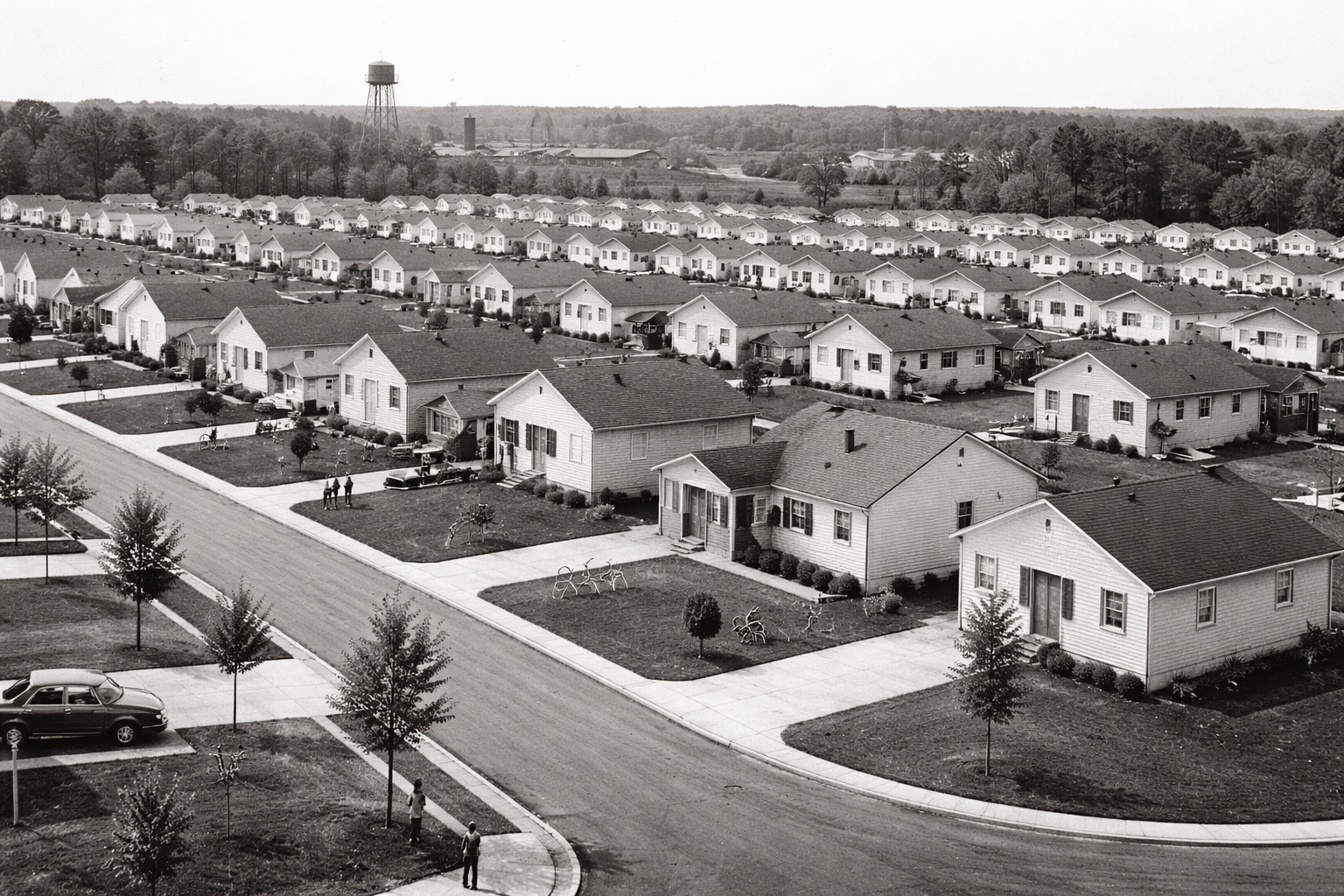
They were not debating premium finishes such as quartz countertops or open-concept layouts. They wanted a solid roof, a functional kitchen, and a place to raise kids. The Victory House is smaller than what most people picture when they say “the good old days,” but it worked and was attainable.
A significant part of the postwar housing story is about speed and standardization. Canada needed homes fast, and much of the early thinking treated housing as a form of nation-building. The focus was on building enough homes for a growing country, not building the dream home you’d pin on a mood board. This was the era of Wartime Housing Limited, a Crown corporation that, between 1941 and 1947, constructed over 30,000 'Victory Houses' to manage the returning tide of veterans.
1944 to early 1960s, the postwar starting line
This era can be characterized by the approach of treating housing as essential infrastructure.
Following World War II, the federal government expanded its involvement in housing finance and programs through the Canada Mortgage and Housing Corporation (CMHC) under the National Housing Act. While the policy details are complex, the practical outcome for homeowners was more straightforward.
A more organized housing finance system made it easier for the market to grow. It led to more steady mortgage lending and helped increase the housing supply as Canada’s population and cities expanded.
Policies such as the 1944 National Housing Act and the 1954 introduction of mortgage insurance enabled Ontario to pioneer the large-scale, detached suburban development model.
The 1954 National Housing Act represents a significant turning point in postwar housing finance, modernizing the framework governing the private and public housing sectors. For the purposes of this analysis, 1954 serves as a pivotal year in the narrative.
Census data shows that both owned and rented homes increased significantly between 1951 and 1961. So, the postwar story isn’t just about everyone buying a house. Canada added many types of homes to accommodate more people and new families.
So why does this period feel so different when people remember it?
It’s because modest expectations, fast building, and a changing mortgage market made it feel like the middle class had a clearer path to owning a home. It wasn’t easy, but it seemed more possible.
1960s, suburbs and the normalization of ownership
The 1960s are when the detached home dream becomes mainstream.
Suburban expansion became the norm. Car-based living took hold, and “One day we’ll buy a home” became the standard middle-class assumption, not an exotic goal.
This is also where the story splits, depending on where you live.
Detached homes were still the most common, but over time, multi-unit buildings grew faster, especially in big cities. This change shows that pressures were building, like higher land costs, more people moving into cities, and the need for different types of housing.
Urbanization data provides a macro-level explanation for why pressure is concentrated in major centres rather than smaller markets. You could already see the early ingredients of the modern debate: some markets felt stable and buildable, while others began to run into physical and political constraints.
Picture a couple in the 1960s heading into the 70s.
They live in a new subdivision. The house is modest compared to today’s homes, but it’s bigger than the small postwar houses. They have a driveway, a yard, and feel like this is what being an adult is supposed to look like.
Now picture that same year in a fast-growing city neighbourhood. You start to see more multi-unit construction, not because people stopped wanting houses, but because land and demand were already pushing housing in different directions.
This is the time Canada’s homeownership story shifted from being the same everywhere to being different in each region.
What people miss is what that actually felt like and why homeownership still rose in the 1970s.
In 1971, Canada’s homeownership rate was 60.3%, and by 1976 it had risen to 61.8%.
So ownership increased during a decade that was getting financially messy. That tells us something important. Rates alone do not explain the long trend. Housing is a system, not a single lever.
What actually changed in the 1970s
Borrowing stopped feeling predictable. Mortgage rates rose and became more volatile. Even if you qualified, you had to consider the renewal risk and the chance that your budget would be hit later.
Rental policy and tenure started to matter more. This is when federal policy broadened beyond narrow construction finance into broader affordability supports, including co-op and non-profit housing. When rental supply is stable and accessible, it gives the whole system breathing room. People can rent without panic, save properly, and move for work without getting crushed by a rent jump.
The country kept urbanizing. Even when the national story looked stable, the pressure wasn’t evenly spread. Some places built up and expanded. Others start hitting land constraints, approval friction, and demand concentration.
That matters for the story because it reinforces something most people miss.
Canada’s housing system has always had two tracks. Ownership and rental. Urban pressure kept building under the surface. Urbanization trends and metro concentration continued. Even when the national story appeared stable, regional stress quietly built in the background. That set the stage for later decades, when Canada stopped behaving like a single market.
Contested interpretation, and we should say it out loud
There are two defensible ways to read 1970s ownership resilience.
A) Rising ownership meant credit access and housing pathways were working.
B) Rising ownership masked rising payment risk, along with uneven regional affordability stress that would become much more obvious heading into the early 1980s.
Both were true at the same time, depending on where you lived and how close to the edge your household budget was.
Things changed in the 1980s.

They were likely not fighting over a bidding war. They weren’t trying to save a down payment that felt like a second mortgage.
Their stress test was simpler and scarier. Can we survive the payment?
By 1981, mortgage rates had reached around 21%, which is hard to picture now. Statistics Canada’s mortgage lending rate series confirmed rate peaked in September 1981 at 21.46%.
This is where a lot of older Canadians get their “you think you’ve got it bad” energy. They’re not wrong about the stress they felt. Picture a couple who bought in the late 1970s. When their mortgage was renewed, the payment wasn’t “tight”, it’s nuclear.
However, they’re incorrect when they assume it’s the same stress today.
Because the modern problem is often the price itself. Back then, the interest and the payments were the monsters.
The long slide into lower rates and easier credit, from the 1990s to the 2000s.
If the 1970s and early 1980s were about inflation and rate shock, the 1990s and 2000s were about something quieter and more powerful: borrowing got easier to carry.
Not “easy” as in painless, but easier in the sense that monthly payments stopped exploding every time rates moved. When you lower the monthly cost of borrowing, you increase the size of mortgage a household can service. That matters because housing doesn’t price based on what you “want” to pay; it prices based on what the market can qualify for and carry.
The late 1990s
A first-time buyer could walk into a bank and hear something their parents rarely heard: “Your payment is manageable.” That single idea had a monumental change in behaviour. People stopped shopping solely based on price and started shopping based on the monthly mortgage payment. When enough people do that all at once, prices are adjusted upward to absorb the newly discovered borrowing power.
The mortgage system itself starts to matter more
This is where it helps to explain, in plain English, that Canada’s mortgage system is not built the same way as the U.S. system.
In Canada, high-ratio mortgages (over 80% loan-to-value) must be insured, and most mortgages renew on shorter terms, often within 5 years. Many mortgages also have recourse, meaning that walking away doesn’t cleanly erase the debt as people think it does in U.S. movies.
That framework pushed Canada toward a different kind of risk. Less of the “wild west lending,” such as the subprime lending in the US, to more “rate risk at renewal,” because borrowers repeatedly repriced their mortgage over time.
The 2008 moment, why Canadians remember it, and why Canada didn’t implode the same way.
Even if someone didn’t own a home in 2008, they remember the vibe: U.S. headlines, bank collapses, panic, RRSP and investment collapse, along with the feeling that the whole system might snap.
Canada felt the global financial crisis, but the housing market outcome wasn’t the same as in the U.S. for a few structural reasons tied to underwriting, insurance, and how mortgages are designed and funded here.
In Canada, in housing terms, it was closer to “a hit and a wobble” than “a full collapse.” One Bank of Canada speech notes that resale house prices in Canada fell about 9% from their 2008 peaks, then recovered.
Mortgage arrears also stayed very low through that period. The Bank of Canada has noted that, even in 2008 and 2009, mortgage arrears never exceeded 0.5% in Canada.
So the lesson for the reader is not “Canada is immune.” The lesson is: Canada’s housing market was wired differently, and that wiring reduced the odds of an American-style wipeout, even though Canadians still felt the economic shock.
The sneaky side effect of “safer” and “cheaper” borrowing
Lower rates: They raised the market’s ceiling by increasing what people could carry, which in turn increased what sellers asked and what bidders could offer. The Bank of Canada has explicitly linked low interest rate environments to rising mortgage debt, and it discusses how the Canadian mortgage market continued to function through the crisis, supported by mechanisms that kept credit flowing.
2010s to 2020s, when the affordability ladder lost its first rung.
Somewhere in the 2010s, the national conversation quietly changed.

It stopped being. Should we buy?
It became: We'd better buy now! If we can’t, what are we supposed to do instead?
That shift is measurable, and it shows up in a few places at once.
The headline change: homeownership started sliding
Canada’s homeownership rate peaked at 69.0% in 2011, then fell to 66.5% by 2021. That is not a tiny rounding error. It is a real retreat from ownership after decades of upward momentum.
*The average value of an owner-occupied home rose by 40% from 2016 to $618,500 in 2021.
The bigger story sits underneath that headline.
The decline is concentrated among younger Canadians, especially in the expensive metro areas where you’d expect new buyers to enter the market.
Research shows that ownership declined clearly across younger age groups from 2011 to 2021.
Ages 25 to 29 fell from 44.1% to 36.5%
Ages 30 to 34 fell from 59.2% to 52.3%
Ages 35 to 39 fell from 67.1% to 61.5%
Meanwhile, older cohorts stayed stable or even ticked up slightly. That’s the tenure split that begins to define the modern era. It is less about personal choices, more about who got on the ladder before the rungs moved.
The Pandemic Home Buying Rush.
Picture a couple in 2021.
They’re not struggling to understand the concept of a mortgage. They’re not irresponsible. They likely have good jobs, good credit, a plan, and the pandemic-era shifts accelerated demand - low interest rates and more money supply.
But the down payment still felt like a second job, and the home they imagined as a starter home now feels like a stretch home with bidding wars going higher and higher every week. They start looking at options that would have sounded unusual a generation ago.
A smaller condo or townhouse instead of a detached home.
A longer commute, or a completely different city, where they can work from home.
A rental suite to offset carrying costs.
Co-ownership with family or friends.
A decision to rent longer, even if they hated that idea.
That last part matters. The majority of non-owners are unhappy renting, and many believe renting is viewed unfavourably by society. So renting is not always a lifestyle choice. For a lot of people, it’s a constraint.
Why did it start feeling impossible? The price tag became the barrier.
In the early 1980s, the payment was the monster. In the 2010s and early 2020s, the price itself became the main obstacle.
When prices run ahead of incomes for long enough, the whole ladder changes.
The starter rung on a housing ladder disappears.
The down payment becomes the gatekeeper.
Help from family becomes more common and more decisive.
The gap between owners and renters starts compounding over time.
The rise of rentership, and why it feels heavier than it used to.
Between 2011 and 2021, renter households grew by 21.5%, more than twice the growth rate of owner households. Roughly one in three Canadians now rents their primary residence.
That shift would be less painful if renting stayed flexible and affordable. It didn’t.
Long-term tenants pay meaningfully less than recent tenants, with a gap of about 19% by 2021. That created a lock-in effect. People who have an affordable unit aim to stay put. People entering the rental market today pay a premium.
So the “save while you rent” advice starts to break down, especially in high-cost regions.
Canada's splintered market.
By the mid 2020s, Canada looked like a set of overlapping housing markets moving at different speeds.
Ontario and British Columbia show greater erosion of ownership and higher price pressures.
The Prairies and parts of Atlantic Canada looked more attainable, which drives interprovincial migration.
Montreal and Quebec City show different rent dynamics than Toronto and Vancouver, which change household formation and independence patterns.
So two Canadians can argue about housing, and both can be right, because they are describing different markets.
What made the 2020s feel like a fracture, not a cycle
A few forces are stacked on top of each other.
Supply constraints and approval friction.
Investor and institutional interest in the rental space.
Policy tightening, including stress testing and rule changes, reduced purchasing power even when rates were stable.
Then the fastest rate hiking cycle in recent history, leading into a renewal and payment shock wave we are currently experiencing.
So what actually changed? (In plain English)
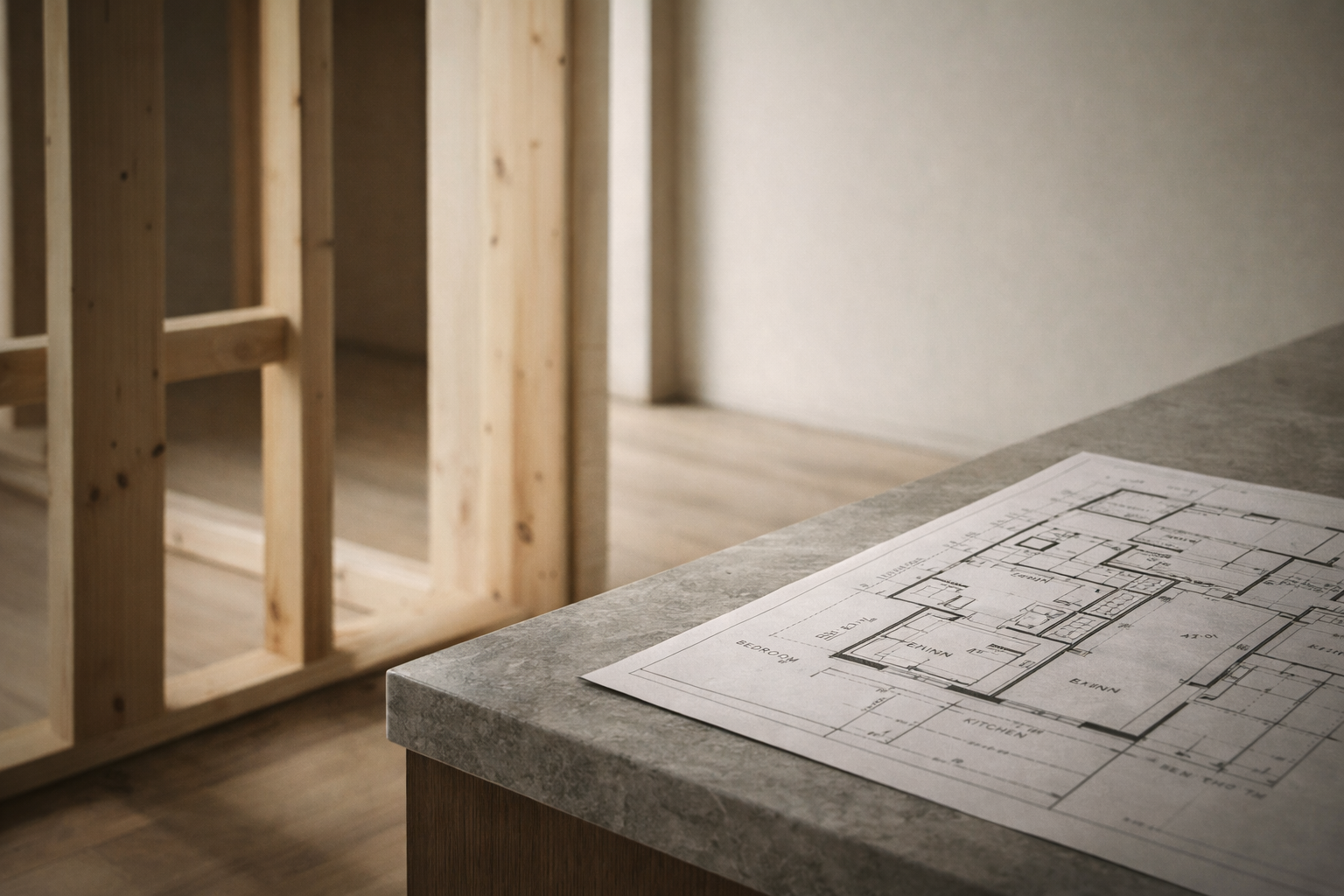
If you zoom out, the story is not “houses got expensive.” The story is that the whole machine changed. Same goal, shelter and stability, totally different inputs.
Here are the forces that keep repeating across generations.
1) Interest rates, gravity for housing
Interest rates are basically gravity. When they rise, payments get heavier. When they fall, borrowing feels lighter.
The twist is that lower rates not only help with monthly payments. They also increase the amount buyers can bid, which pushes prices up when supply cannot keep up. That is one of the primary reasons the low-rate decades reshaped affordability.
2) Borrowing power, the lever that moves prices
Buyers began shopping by payment, not by price.
When the system lets households carry larger mortgages, prices adjust to the new ceiling. That is why affordability can worsen even when payments seem manageable.
3) Supply, land, and the limits of the suburban model
Postwar Canada could build outward fast. Many cities cannot do that as easily now.
Land constraints, approval timelines, infrastructure limits, development fees, and local politics all change how quickly housing supply can respond to demand.
Some regions can build and expand faster. Others get stuck in a pattern in which demand rises faster than supply year after year.
4) Household structure, dual incomes became normal, and the market priced it in
Much of the postwar nostalgia is tied to the story of the one-income household.
Over time, labour force participation and household income structure changed. Two incomes became more common, and the market gradually priced that reality in. That helps explain why many younger buyers feel like they are doing everything right and still falling behind. They are competing in a system built around a higher household earning capacity than their grandparents faced.
5) Credit rules and mortgage design
Canada’s mortgage system has always been rule-heavy, despite the casual way people talk about it.
Changes in insurance rules, qualification rules, amortization norms, and lender risk appetite all shape who gets in, and what they can afford. This is one reason the same interest rate can feel totally different across two eras.
In the 1970s and early 1980s, the risk was the payment shock.
In the 2010s and 2020s, the risk became the price tag, the down payment, and the income-price gap.
6) Expectations: What counts as a starter home
This one is cultural, but it matters more than people admit.
Postwar homes were smaller and simpler. Families made do with less space because the goal was stability, not perfection.
Over time, the definition of “normal” expanded. Larger homes, larger lots, more finishes, and more square footage became the default aspiration. Builders also respond to profitability. When land and approvals are expensive, the math pushes toward higher-priced units to justify the cost stack.
Now the pendulum is swinging again. People are more open to higher-density, smaller-footprint developments and rental-income suites. Not always by choice, but because affordability forces creativity.
7) Policy and the cost stack, more than just mortgage rules
Housing is not priced only by what a buyer can borrow. It is also shaped by construction costs.
That cost stack includes things most buyers never see directly:
* Development charges and municipal fees.
* Infrastructure requirements.
* Permitting and approval timelines.
* Property taxes and long-term municipal budget pressures.
* Building code changes and energy requirements.
* Financing costs for builders during construction.
None of this is a complaint. It is simply reality. If it becomes too expensive to build smaller, lower-margin housing, the market produces less of it. That is one reason the starter rung can disappear, even when demand is screaming for it.
What surprised people in each era
* 1950s: Homes were smaller than the nostalgia suggests, but they were attainable and built fast.
* 1970s and early 1980s: The stress test was the payment, not the down payment.
* 1990s and 2000s: Lower rates felt like relief, but they quietly raised the bidding ceiling.
* 2010s and 2020s: The gap became structural, prices ran ahead of incomes, and younger ownership began to decline.
* 2026: Renewals and payment shock are real, and the experience depends heavily on region..
Bringing it back to you and your home journey.
If you take nothing else from this timeline, take this.
Every generation had its own version of hard.
Your grandparents may have had lower prices relative to income in many areas, but they also lived through periods where borrowing costs were brutal, and job security was not guaranteed.
Today’s challenge is different. The system shifted in a way that makes the entry cost feel like a barrier, especially in the highest-demand regions. That does not mean homeownership is dead. It means the old assumptions are outdated.
So the purchase strategy has to change.
For some people, that means getting serious about timing and preparation, rather than trying to time the market like a lottery.
For others, it means choosing a different first property type, location, or ownership structure, then stepping up over time.
For many, it means treating mortgage planning like a long game, not a one-time transaction.
Homeownership in Canada has always been shaped by a mix of policy, credit, interest rates, supply, and cultural expectations. Those forces keep changing, and that’s why home buying now feels less like a simple milestone and more like a strategy problem.


